Mid-term review 2026: The VET Chain advisory tool on track for success
02.07.2026
From the bean to the coffee in the cup, from iron ore to the metal spindle: the VET Chain highlights the working and training conditions in global supply chains. In the first half of 2026, around 80 participants discussed sustainability – in Germany and internationally – across nine workshops.
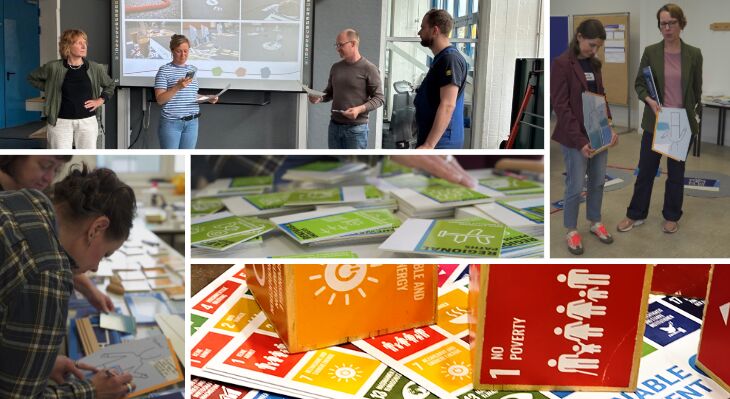
The series kicked off in January 2026 with a specialist event organised by Engagement Global in Bonn, attended by around 50 representatives from civil society. The GOVET team led a condensed workshop using the ‘VET Chain’ advisory tool. The participants examined the value chain of chocolate and agreed that the focus on fair and sustainable conditions at the start of the supply chain must be extended to the entire supply chain, and that this has an impact on how the product is valued and on consumer behaviour.
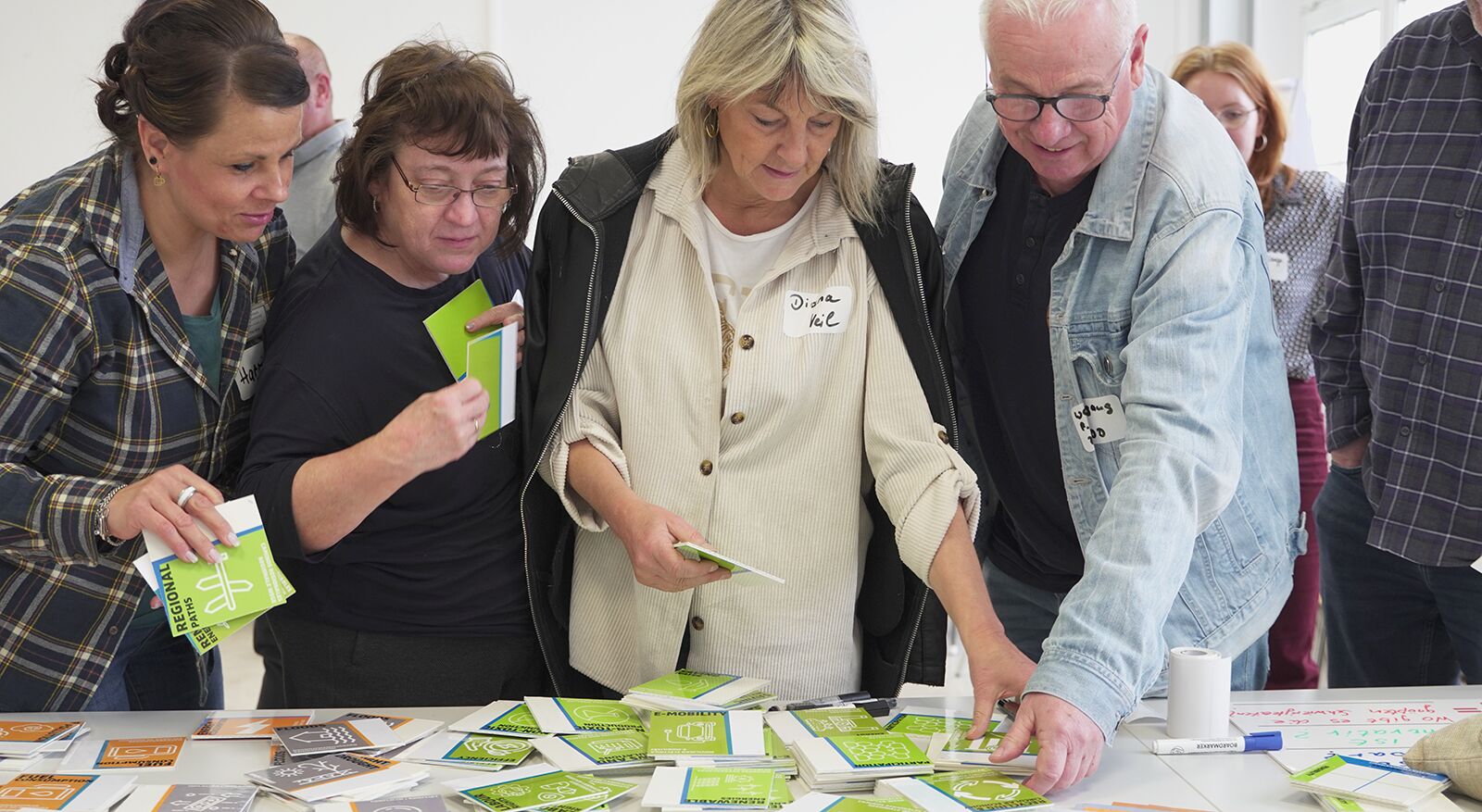
At the first open VET Chain workshop in March 2026, GOVET, together with the Bonn-based NGO SÜDWIND e.V., examined global interconnections in vocational education and training. Using coffee as an example, the workshop demonstrated how sustainability is achieved along a supply chain – and which skilled workers are involved. With expert support from Friedel Hütz-Adams of SÜDWIND, GOVET took a closer look at the coffee supply chain. The workshop did not address sustainability in abstract terms, but rather through the lens of a specific product: from cultivation through processing and transport to trade and consumption. At the same time, it focused on the associated qualification and competence requirements in vocational education and training.
Global challenges and complex structures
The VET Chain shows that working, learning and training conditions vary greatly along global supply and value chains. These differences shape the everyday working lives of many people and present stakeholders along the chain with a wide range of challenges, as is also the case with coffee. SÜDWIND describes coffee as an everyday consumer good that highlights global social, economic and environmental challenges.
Vocational education and training as a driver of sustainable transformation
A forward-looking approach to vocational education and training takes the entire supply chain into account. It brings together different stakeholders and strengthens the skills needed to shape economic processes in a socially and environmentally responsible manner. The workshop offered participants a new perspective on coffee: as an example of global economic interdependencies and of the role of vocational education and training in sustainable transformation processes. Working with a specific supply chain provides a practical approach to key issues surrounding the transformation of the economy and the world of work. Vocational education and training can help to firmly embed sustainability in professional skills and work processes.
The coffee supply chain was also the focus of an internal workshop in April at the BIBB, attended by, amongst others, the BIBB’s Director of Research, Professor Dr Hubert Ertl. He emphasised that the VET Chain is clearly structured from a didactic perspective and thus offers added value by combining supply chain perspectives with an approach specific to vocational education and training.
From iron ore to metal spindles
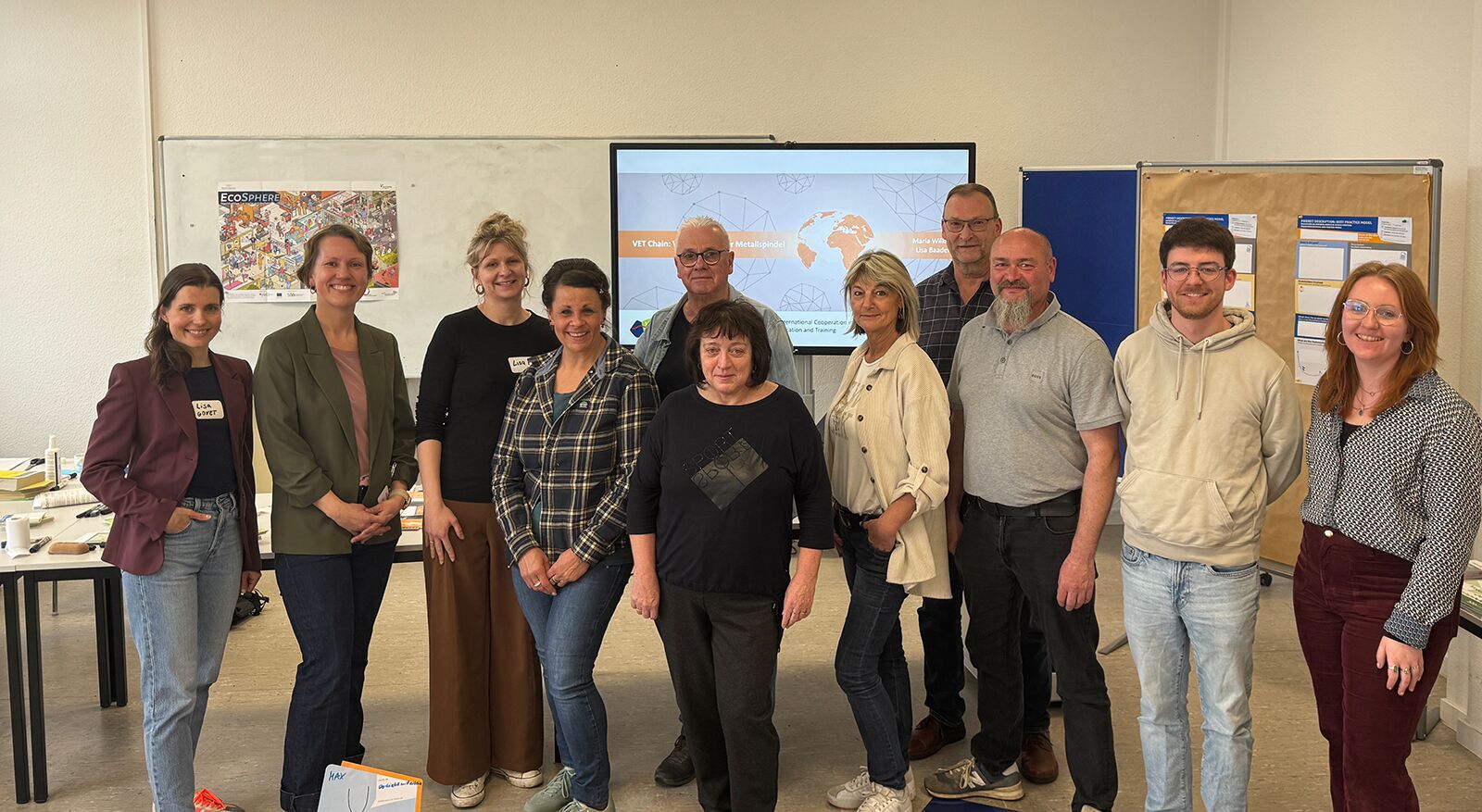
At the workshop with the Bildungswerk der Sächsischen Wirtschaft in April, the GOVET team, together with trainers, vocational college teachers and the BBNE-EcoNet team, examined the supply chain for a spindle. What occupations are involved? What challenges do companies face, and what possible solutions might there be? How can the topic of sustainability be implemented in vocational training in very concrete terms? After analysing the supply chain, the participants developed initial ideas for potential projects with their apprentices: recycling projects, a site hut as a meeting place for apprentices, the reuse of waste products such as slag, and a VET Chain involving apprentices.
%20(002)_1600x877_rdax_80p.jpg)
Vienna and Berlin: Sustainability in public transport
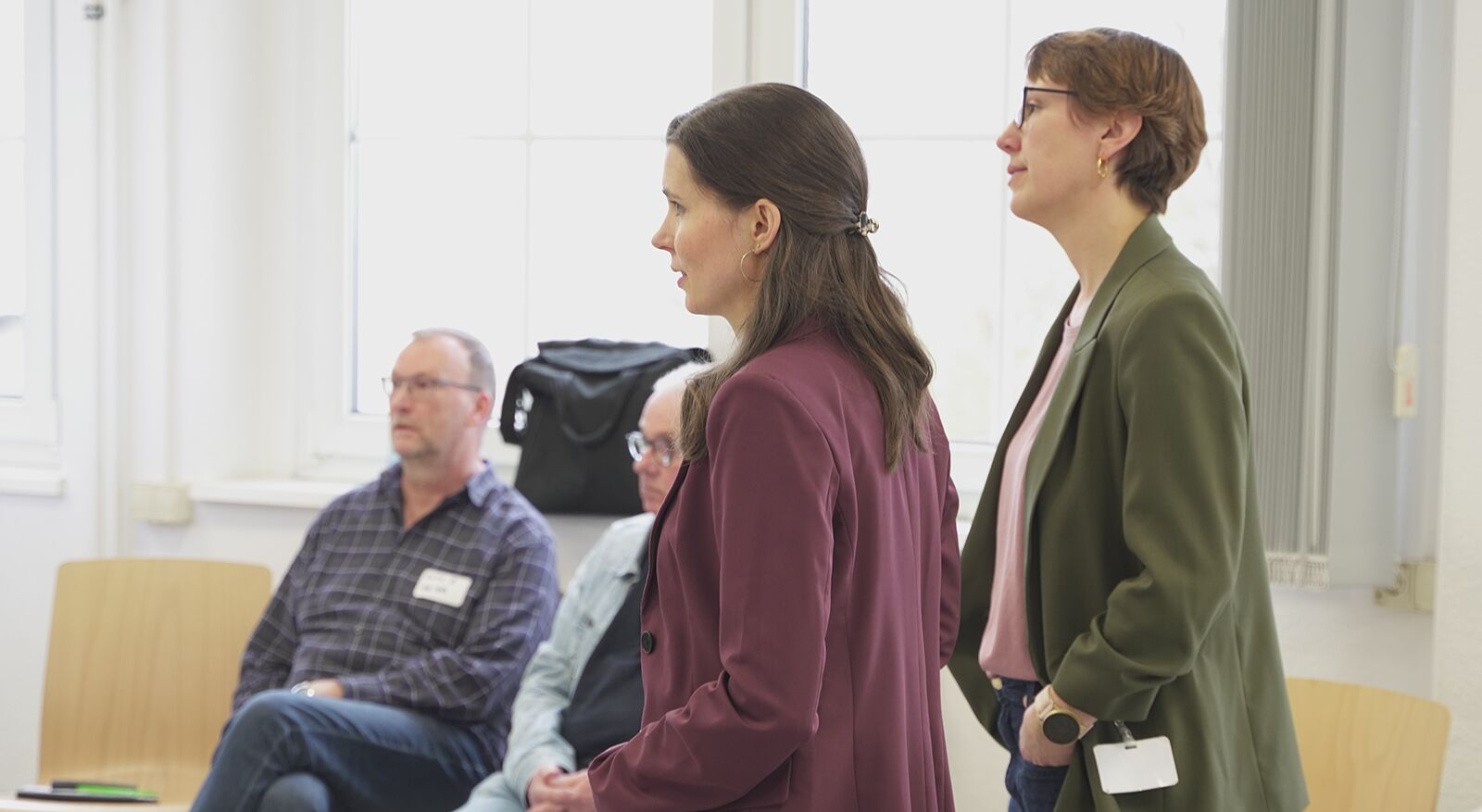
What began for Marlies Unterweger, from Wiener Linien’s apprentice management team, as a VET Chain ‘Training for Trainers’ workshop, developed in the first half of 2026 into a Green Erasmus project, funded by the European Union. The project involves collaboration between the Austrian Institute for Vocational Education and Training (öibf) – which is also a BIBB partner institute – Wiener Stadtwerke and the Berlin Transport Authority (BVG). Wiener Stadtwerke aims to make the entire group climate-neutral by 2040. This also encompasses interpersonal relations, diversity within the organisation and the resource-efficient, economical use of operational resources. The topic is therefore of such great relevance that the head of training at Wiener Stadtwerke also travelled to the event and took part in the VET Chain session on the tyre value chain alongside apprentices and trainers from the BVG. There were lively discussions, particularly with regard to the German standard occupational profile ‘Environmental Protection and Sustainability’. Wiener Stadtwerke aims to incorporate sustainability and diversity into all 21 vocational profiles. The collaboration with Wiener Stadtwerke will continue in the second half of the year.
German-Danish exchange on sustainable vocational training
The regional partnerships between the federal state of Schleswig-Holstein and neighbouring Denmark have traditionally been strong and thrive on exchanges, which also take place at the level of vocational training. The topic of sustainability has played a major role in this for years. The regional vocational training centre in the town of Schleswig is a beacon in vocational training and repeatedly steps out of the shadow of the nearby metropolis of Hamburg. It was therefore only natural that on the beginning of June, Kirsten Lemke, the headteacher, invited Danish colleagues from IBC Kolding to the VET Chain Coffee event. Also present was Lucas Burghardt, managing director of the speciality coffee roastery ONOMA in Flensburg. This small company takes a close look at its own supply chain, focusing on transparency and fair relationships with producers and importers. Together with their Danish colleagues, the VET Chain was developed within its local context – on the plantation, during drying, transport, shipping, storage and roasting.
VET Chain internationally: Ghana, Georgia and the Philippines
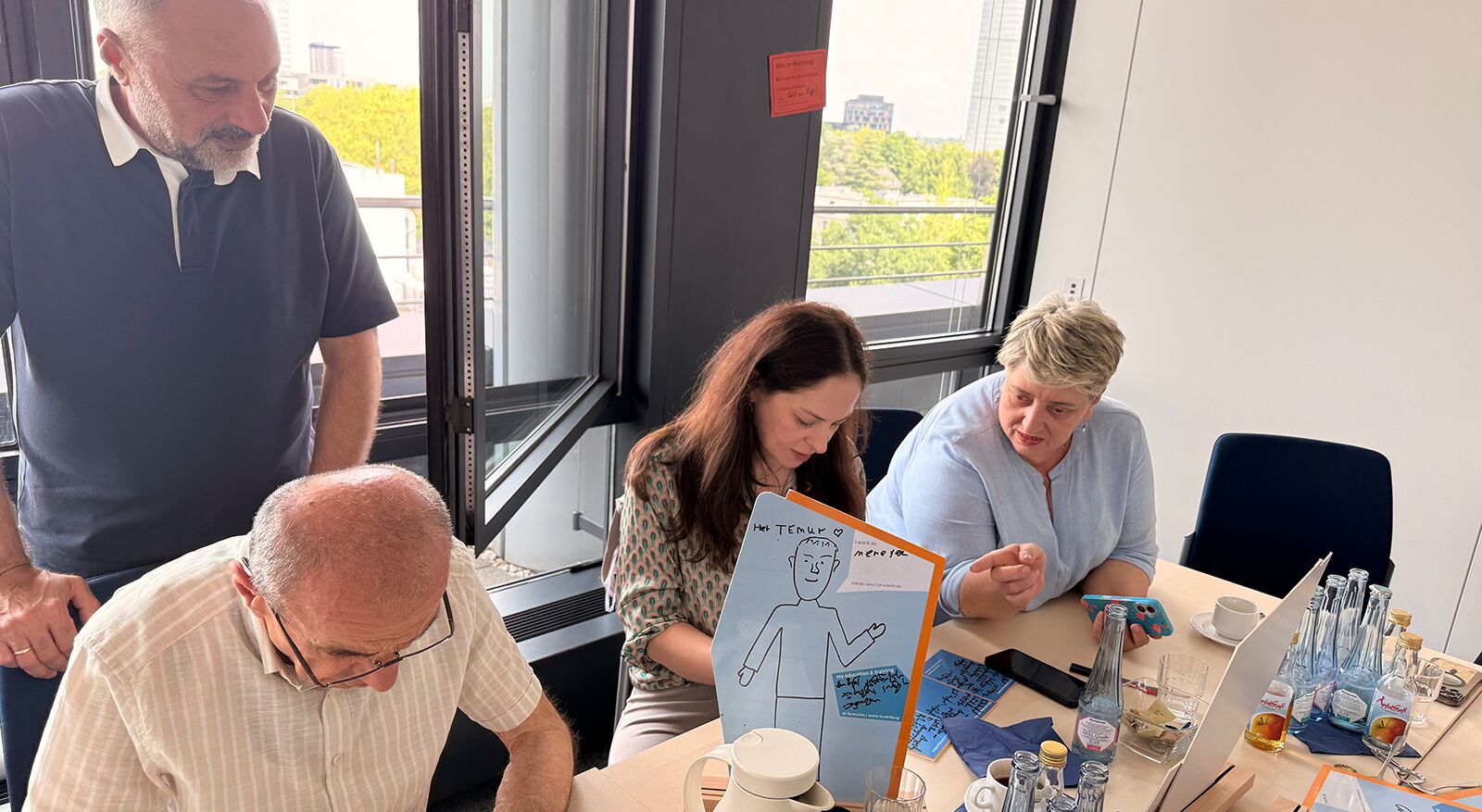
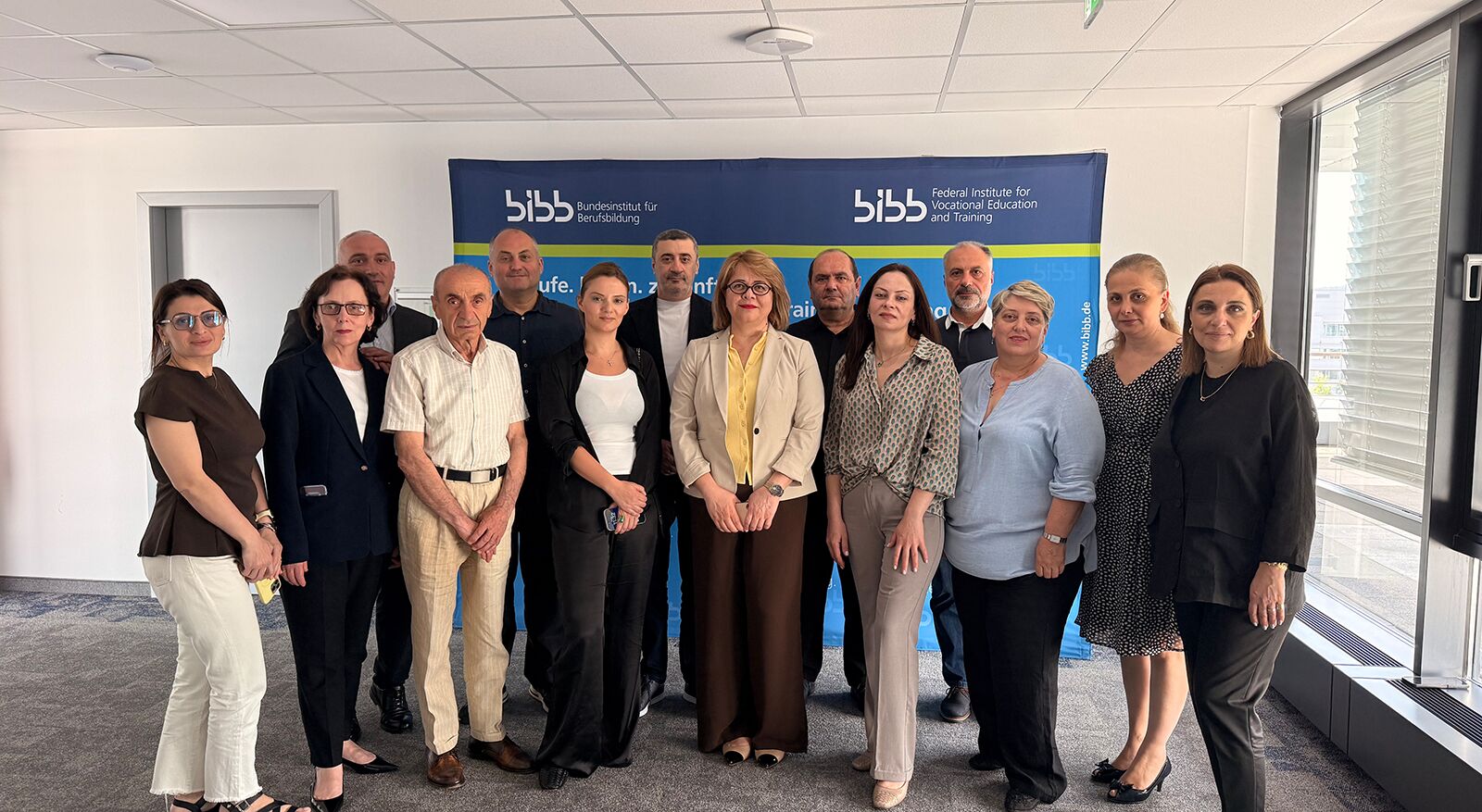
The fact that the VET Chain advisory tool also works abroad has already been demonstrated in recent years through trials with several partner countries and delegations. In the first half of 2026, further workshops took place in an international context: staff from the Commission for TVET in Ghana examined the cocoa supply chain; the supply chain for hazelnuts was analysed with a Georgian delegation; and discussions on dried mangoes were held at the Philippine Embassy.
The experiences shared with colleagues showed that, particularly at the start of the supply chain – during harvesting or in the context of sourcing raw materials – aspects relating to working conditions and access to international marketing channels are of greater significance. The Philippine Ambassador, Maria Teresa T. Almojuela, emphasised:
We have gained a deeper understanding of the scope and significance of technical vocational skills along the value chains, and of how greening must be embedded within these chains. It was a stimulating workshop that provided an overview of the interfaces between technical vocational education, the requirements of the value chain and the circular economy.
Maria Teresa T. Almojuela, Ambassador of the Philippines to the Federal Republic of Germany
The Philippine Embassy considered the workshop appropriate as it strengthens support for the Technical Education and Skills Development Authority (TESDA) whilst also highlighting new ways of collaborating with BIBB-GOVET to promote cooperation between the Philippines and Germany in the field of TVET, particularly with regard to green jobs.