Experiencing dual vocational training: Delegation from Costa Rica visits GOVET
How does the dual vocational training system in Germany work, and how does it help to ensure a supply of skilled workers? A delegation from Costa Rica explored these questions during a study visit to the BIBB and to various institutions and companies in Bonn and the Rhein-Sieg district from 9 to 13 November 2026.
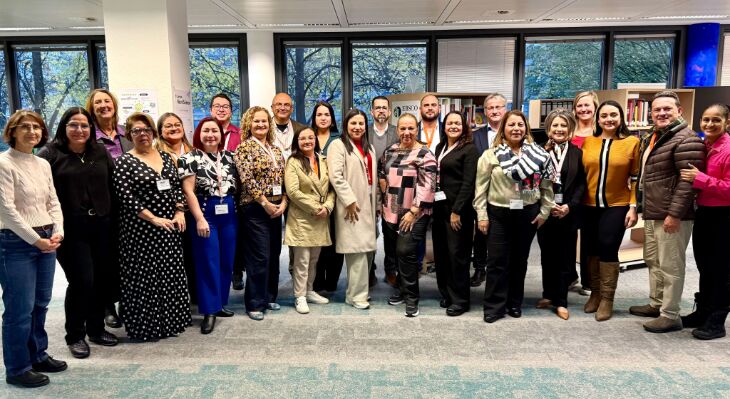
Learning from practice – meetings with key players in vocational training
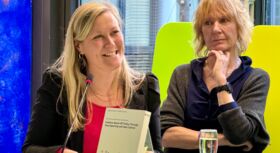
Throughout the study week, the guests from Costa Rica were accompanied and looked after by Julia Olesen and Nicole Josef. They acted as points of contact for the delegation and facilitated the professional exchange during the various programme items and visits.
To begin with, Julia Olesen and Ralf Hermann provided fundamental insights into the German dual vocational training system at the Federal Institute for Vocational Education and Training (BIBB). Dr Anke Bahl (Competence Development Division), who has researched strategies for cooperation aimed at increasing the participation of small and medium-sized enterprises (SMEs) in dual vocational training, discussed the wide range of opportunities for collaboration with the participants.
The delegation gained a first-hand understanding of how apprenticeships work in a real-world business setting during a visit to the Hyatt Hotel in Cologne. Jacqueline Hüsch presented the hotel’s apprenticeship programme. Particularly impressive was the personal account given by an apprentice, who provided insights into her day-to-day training experience.
At the Ludwig Erhard Vocational College in Bonn, Headteacher Hans-Joachim Dörr and Ms Porschen provided information on the training programmes available in the fields of commerce and administration. Seven second-year trainees gave first-hand accounts of their experiences in the dual vocational training system. In addition, the delegation was given an overview of the German education system – from early childhood education right through to university.
The role of the Chambers of Industry and Commerce (IHK) was also a key focus: during a visit to the IHK Training Centre in Bonn-Beuel, Jürgen Hindenberg explained the tasks and responsibilities of the Chamber of Industry and Commerce (IHK) within the dual system. Topics discussed included the examination system, the stakeholders involved, the costs and benefits of vocational training, as well as the importance of vocational training for the German economy and the challenges posed by the shortage of skilled workers.
Another item on the programme took the delegation to the Carl Reuther Vocational College in Hennef. Headteacher Thomas Heußner, along with Alexa Sauer and Andre Peters, presented the vocational college as a centre of excellence for vocational and interdisciplinary training in the commercial and technical sectors. During a guided tour of the training workshops, the guests were able to gain first-hand insight into the practical nature of the training. The educational programme also offers a range of school-leaving qualifications, including the Abitur.
A visit to the roofing company Setz & Leuwer in Königswinter demonstrated how training and corporate responsibility can be combined. Alongside insights into the company’s structure and a tour of the premises and production hall, particular attention was paid to the company’s commitment to sustainability and the quality of its training. In 2024, the company was recognised by the Cologne Chamber of Commerce as a ‘Top Training Company’ in the ‘Best Recruiting’ category.
Knowledge, data and perspectives for vocational education and training
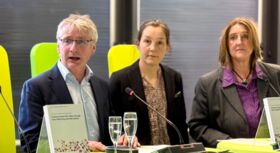
In addition to the practical insights, the delegation also addressed current technical issues. At the BIBB, the delegation attended the book launch for ‘Evidence-based VET Policy through Data Reporting and Data Science’ with Professor Dr Hubert Ertl and Birgit Thomann, Head of the International Department.
Dr Carolin Linckh rounded off the programme with an introduction to the costs and benefits of dual vocational training from a business perspective.
Another aspect of the study visit was the cultural programme, which included a guided tour of Bonn and the new permanent exhibition at the Haus der Geschichte, where the significance of dual vocational training in Germany’s post-war history – both economically and socially – is clearly highlighted.
Insights from the study visit
The meetings and discussions once again made it clear that dual vocational training is a collaborative effort involving many stakeholders. Companies, vocational schools, chambers of commerce and other institutions share responsibility for training qualified skilled workers. The direct exchange with trainees, teachers, school heads and company representatives was particularly valuable. Their experiences brought the German vocational training system to life and opened up numerous avenues for international exchange.
GOVET – the Federal Government’s Central Office for International Vocational Training Cooperation within the Federal Institute for Vocational Education and Training (BIBB) – has been facilitating and supporting cooperation between Germany and Costa Rica in the field of vocational training for many years. The delegation from Costa Rica, comprising representatives from the Ministry of Public Education (MEP), the National Institute for Vocational Training (INA) and the Advisory and Support Commission for Dual Vocational Training (CAP), had been invited on a study visit to learn about the German dual training system.